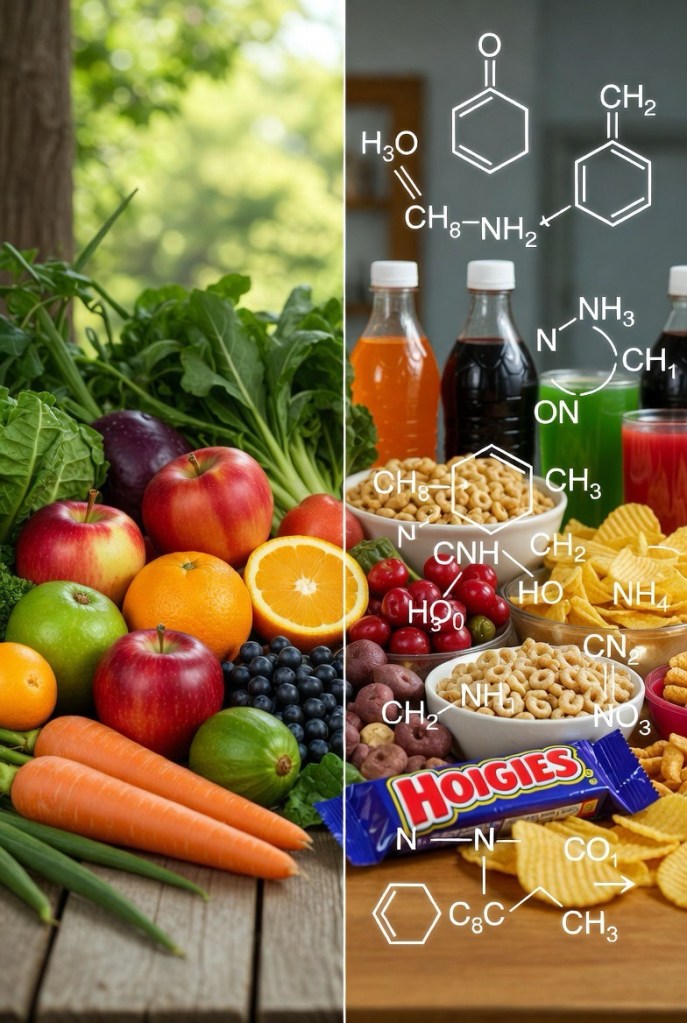
Picture this: you’re in a supermarket, trying to choose between two cereals. One says “fortified,” another says “energy boost.” But when you turn the pack around, the ingredient list looks like a chemistry exam.
Sodium benzoate. Tartrazine. Artificial flavors.
Most people don’t realize how often these additives appear in everyday foods—and how regular exposure may affect long-term health.
The good news? You don’t need a perfect diet or expensive organic foods to reduce your risk. Small, practical changes can make a real difference.
Let’s break it down.
What Are Food Additives—and Why Are They Everywhere?
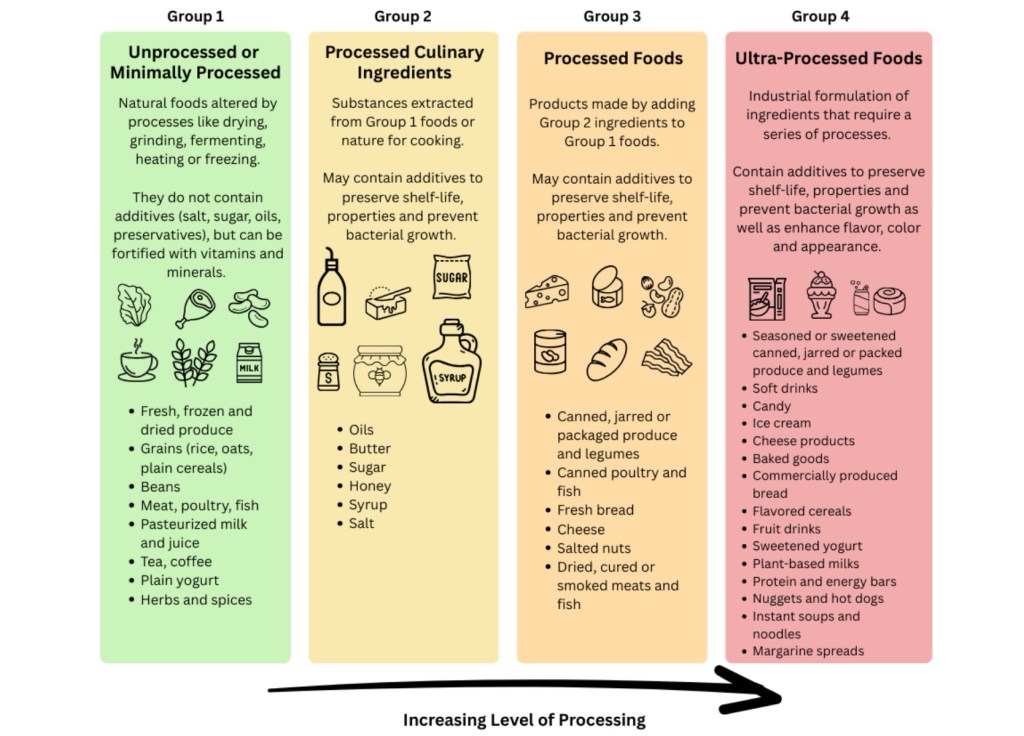
Processed and ultra-processed foods rely on additives to:
1. Extend shelf life
2. Improve taste and texture
3. Enhance color and appearance
4. Reduce production costs
These foods include:
– Instant noodles
– Flavored drinks
– Processed meats
– Sweet biscuits
– Sugary cereals
Globally, research shows high consumption of ultra-processed foods is linked with increased risks of:
Obesity
Type 2 diabetes
Heart disease
Certain cancers
Organizations such as the World Health Organization and the American Heart Association continue to encourage reducing highly processed foods as part of disease prevention.
Common Additives to Watch Out For
Not all additives are dangerous, but some are worth limiting—especially when eaten frequently.
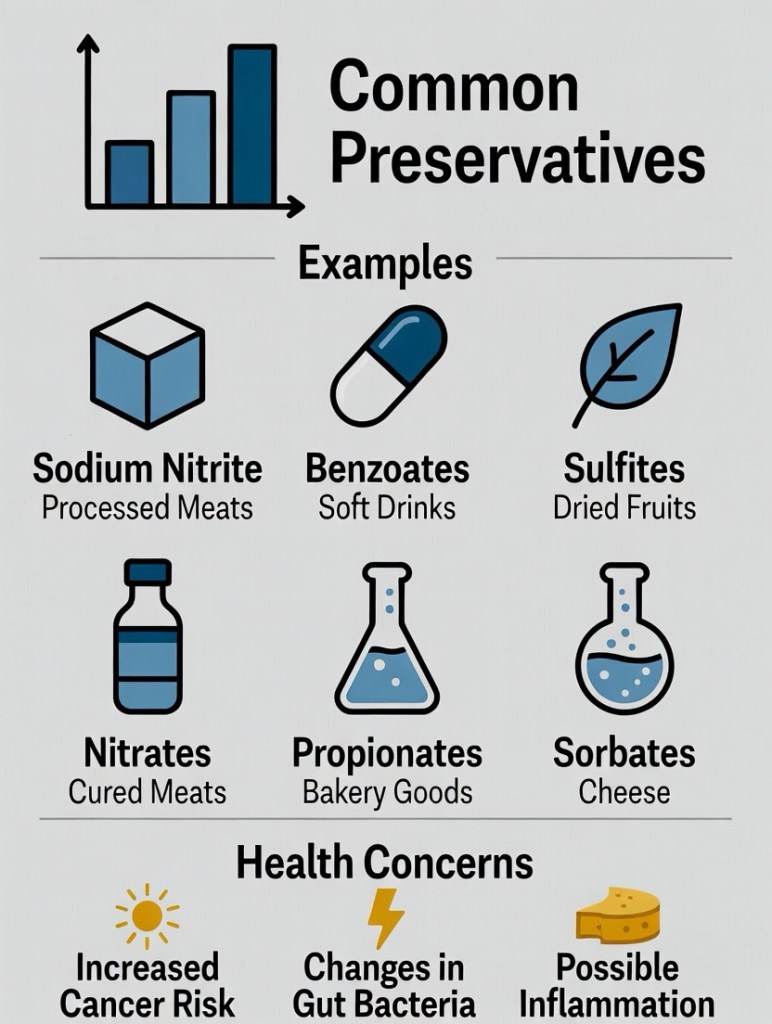
1. Preservatives
Used to prevent spoilage.
Examples:
Sodium nitrite
Benzoates Sulfites
Frequent intake has been associated in studies with:
Increased cancer risk
Changes in gut bacteria
Possible inflammation
Processed meats are one of the main sources.
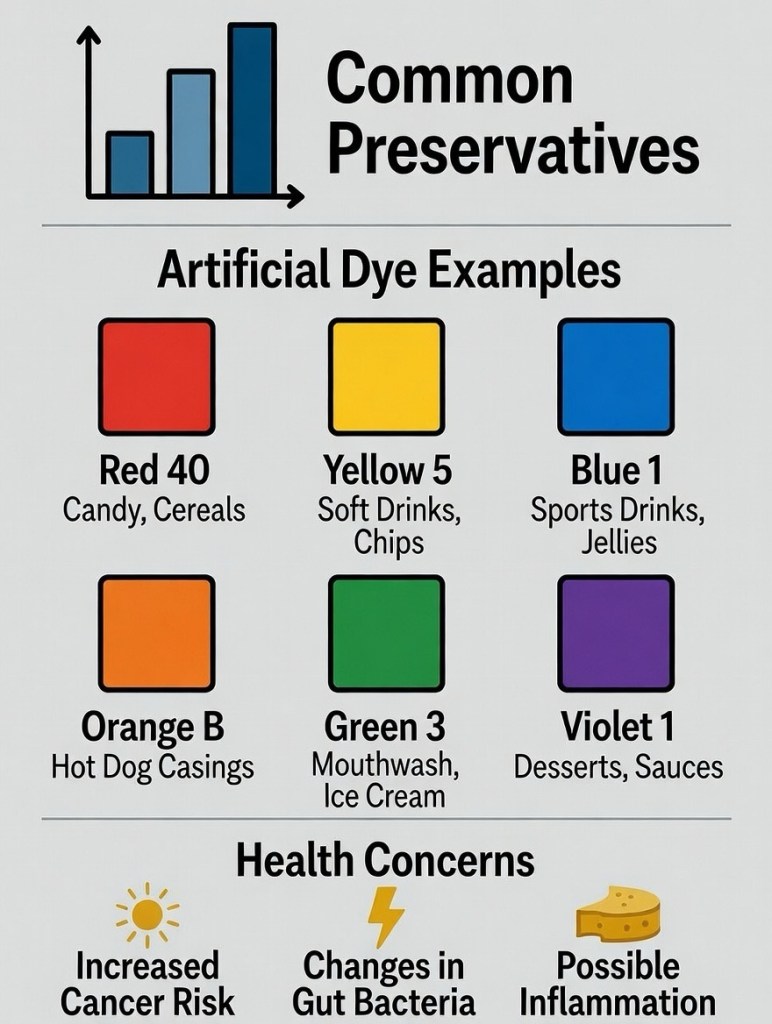
2. Artificial Colors and Flavor Enhancers
Examples:
Tartrazine (Yellow dyes)
Monosodium glutamate (MSG)
Research suggests artificial colors may contribute to hyperactivity in some children, while excessive flavor enhancers may trigger headaches or sensitivity in certain individuals.
3. Emulsifiers and Thickeners
Examples:
Carrageenan
Polysorbates
These help foods stay smooth and creamy but may affect gut health when consumed in large amounts over time.
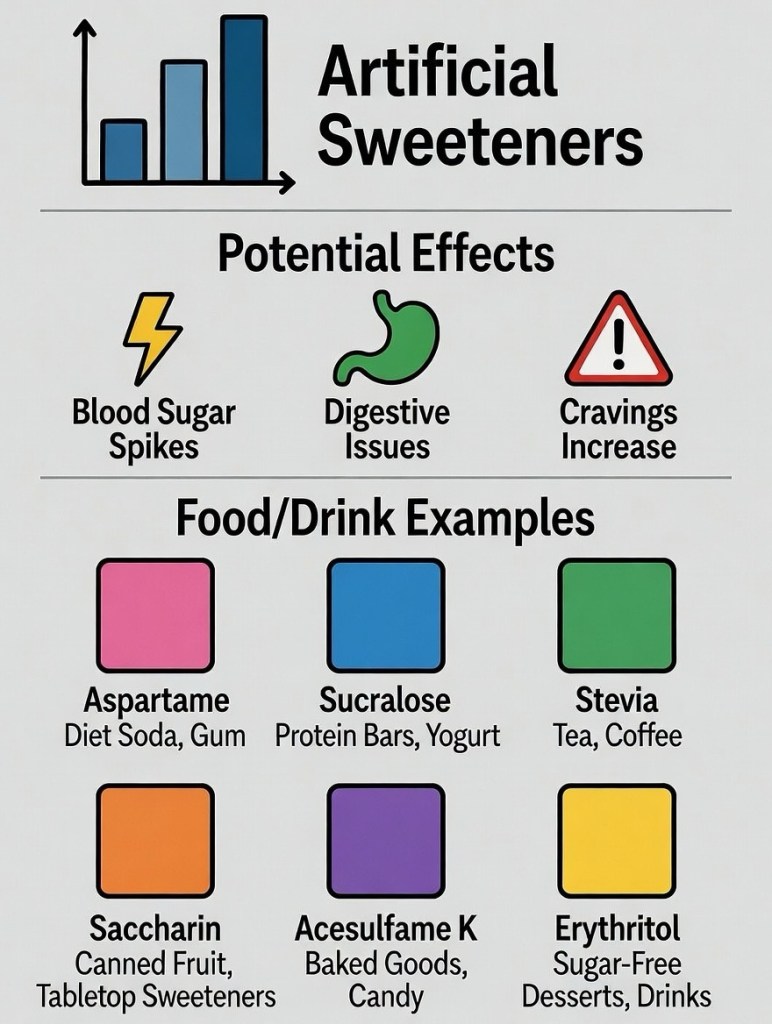
4. Artificial Sweeteners
Examples:
Aspartame
Saccharin
While useful for reducing sugar, some studies suggest they may:
Affect appetite regulation
Alter gut bacteria
Increase cravings in some people
Moderation remains important.
A Hidden Source Many People Forget: Packaging Chemicals
Chemicals such as BPA, phthalates, and microplastics can migrate from packaging into food—especially when:
– Food is heated in plastic
– Bottled drinks sit in heat
– Foods are stored for long periods
The Environmental Working Group highlights packaging as a growing concern in long-term exposure to chemicals.
Why This Matters More Than We Think
Additives don’t usually cause immediate illness. That’s why many people ignore them.
The real concern is long-term, repeated exposure combined with:
Low physical activity
High sugar intake
Stress Poor sleep
It’s the combination that increases risk—not one snack.
That’s an important distinction.
Simple Ways to Reduce Your Exposure (Without Stress)
You don’t need to eliminate all processed foods. Start with small changes.
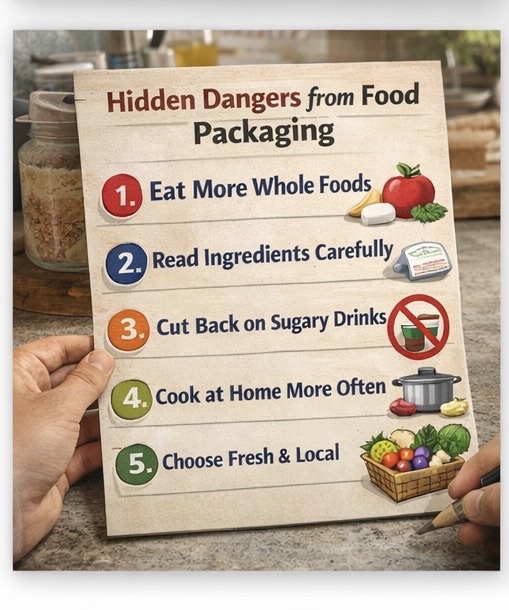
1. Eat More Whole Foods
Build meals around:
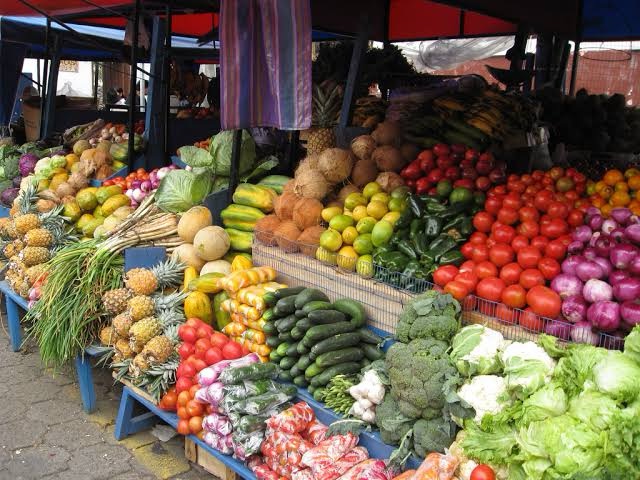
Fruits and vegetables
Beans and legumes
Whole grains
Eggs and fish
In Ghana, affordable healthy staples include:
Kontomire
Garden eggs
Beans
Groundnuts
Millet and oats
These are nutritious and budget-friendly.
2. Read Ingredient Lists
A simple rule:
If the ingredient list is very long or hard to pronounce, eat it less often.
You don’t need to be perfect—just more aware.
3. Reduce Sugary Drinks
One of the biggest health improvements many people notice comes simply from:
Drinking more water
Taking sobolo with less sugar
Choosing fresh coconut water occasionally
This single habit can reduce excess additives significantly.
4. Cook at Home More Often
Home cooking doesn’t have to be complicated.
Simple meals like:
Rice and stew
Boiled yam and kontomire
Beans and plantain
Are naturally low in additives and highly nourishing.
5. Don’t Aim for Perfection
This is important.
You can still enjoy:
Bread
Occasional snacks
Eating out
Health improves through consistency, not restriction.
A Quick Checklist to Remember
When shopping, ask yourself:
✔ Can I recognize most ingredients?
✔ Is there a less processed option?
✔ Am I buying this out of habit or hunger?
Even changing one item per week makes a difference.
A Realistic Perspective
As a nutrition professional, one thing I’ve observed repeatedly is this:
People don’t need extreme diets.
They need better everyday habits.
Reducing sugary drinks, eating more home-cooked meals, and reading labels often leads to:
Better energy
Improved digestion
More stable blood sugar
Small changes add up.
Final Thoughts
Processed foods are part of modern life—but understanding what’s inside them gives you power over your health.
You don’t need to fear food.
You just need to make informed choices more often than not.
Next time you’re in a shop, take a moment to read one label.
You might be surprised by what you find.
 Nutrition & Tech
Leave a comment